Last Update: 3 September 2025

The article addresses the common problem of a blocked laundry sink, detailing its causes, warning signs, and solutions. It explains that lint, soap scum, hair, and debris are primary culprits, often leading to slow drainage, foul smells, or even overflows. The guide offers practical DIY fixes like plunging, using baking soda and vinegar, or cleaning the P-trap, while also cautioning against harsh chemical cleaners.
For persistent or severe blockages, the article emphasizes the importance of professional plumbing services. Experts utilize advanced techniques such as CCTV drain cameras for accurate diagnosis and high-pressure water jetting for effective clog removal, ensuring a long-term solution. Preventative measures, including installing lint traps and regular drain maintenance, are also highlighted to help maintain a trouble-free laundry system.
Ever turned off the washing machine only to find water pooling in your laundry sink? It’s a scene all too familiar and one that instantly turns a regular chore into a headache. That unexpected backup in the laundry room sink isn’t just annoying; it’s a signal that something in your plumbing system isn’t working as it should. You might think it’s just a one-off, but more often than not, it’s the start of a bigger issue brewing behind the scenes.
Blocked laundry sinks are surprisingly common, yet most people only notice them when water stops draining properly or other drains around the house begin acting up. And let’s be honest, dealing with a clogged drain is no one’s idea of fun. But ignoring it won’t make it go away.
This guide walks you through what causes these blockages, how to spot early warning signs, easy fixes you can try yourself, and when it’s time to call in professional plumbing services.
What Causes a Laundry Sink Drain to Back Up?
Your laundry sink drain works hard every wash cycle, and over time, it collects all sorts of unwanted gunk. One of the biggest culprits is lint, which slips through from the washing machine hose and clings to the inside of the drain pipe. Mix that with fabric fuzz, soap scum, and leftover laundry detergent, and you’ve got a recipe for a clogged drain.
Washing clothes covered in dirt, grease, or debris left in pockets? That all heads straight to your laundry room sink. Towels and clothes often carry a small amount of hair and other debris, which builds up and causes poor drainage. Even hard water can add to the problem, leaving mineral deposits behind.
Sometimes, it’s what you can’t see that causes issues. The P trap beneath your sink might be full of gunk, or worse, underground pipes may be cracked or blocked by tree roots. And don’t forget about foreign objects, think toys, buttons, or bits of equipment, accidentally slipping into the drain.
If your plumbing system is older or has seen better days, you might also be dealing with pipe deterioration or a build-up of grime that just won’t budge without serious help.
Need Help From Gold Coast Plumbing?
Signs of a Blocked Laundry Room Sink
A blocked drain rarely appears out of nowhere. One of the first things you might notice is water draining slowly or not at all from the sink. If your washing machine drains and the water starts rising in your laundry room sink, it’s a clear warning.
You might also catch a whiff of something nasty coming from the sink’s drain. That foul smell usually points to a clog or stagnant water. Gurgling or bubbling noises when other drains in your home are in use are another red flag.
Worse still, water could back up and overflow onto your laundry room floor. If you see any of these signs, it’s best to act before the problem gets worse.
Safe DIY Fixes to Try at Home
Got a blocked laundry sink and ready to tackle it yourself? Start with a plunger over the utility sink, it’s one of the easiest ways to dislodge a minor clog. Ensure there’s enough water to cover the plunger’s base for proper suction and give it a few strong pumps.
Next up, grab the pantry staples. Pour a generous amount of baking soda into the sink’s drain, follow it with vinegar, and let it bubble away for 15 minutes. Then, pour boiling water down to help flush away the loosened soap scum, grease, and laundry detergent residue.
Still blocked? Place a bucket under the sink and check the P-trap. Unscrew it, pull it apart, and remove any fabric fuzz, lint, or other debris left from the washing.
For deeper blockages, a drain snake can help clear the drain pipe without harming the plumbing system. Just steer clear of commercial drain cleaners they may seem tempting, but often corrode pipes and worsen the problem.
Prevent future issues by cleaning the drain trap regularly, checking the washing machine hose for buildup, and avoiding pouring grease or gritty water into the laundry room sink. Don’t forget to install a lint trap to catch debris before it clogs your pipes.
When DIY Isn’t Enough
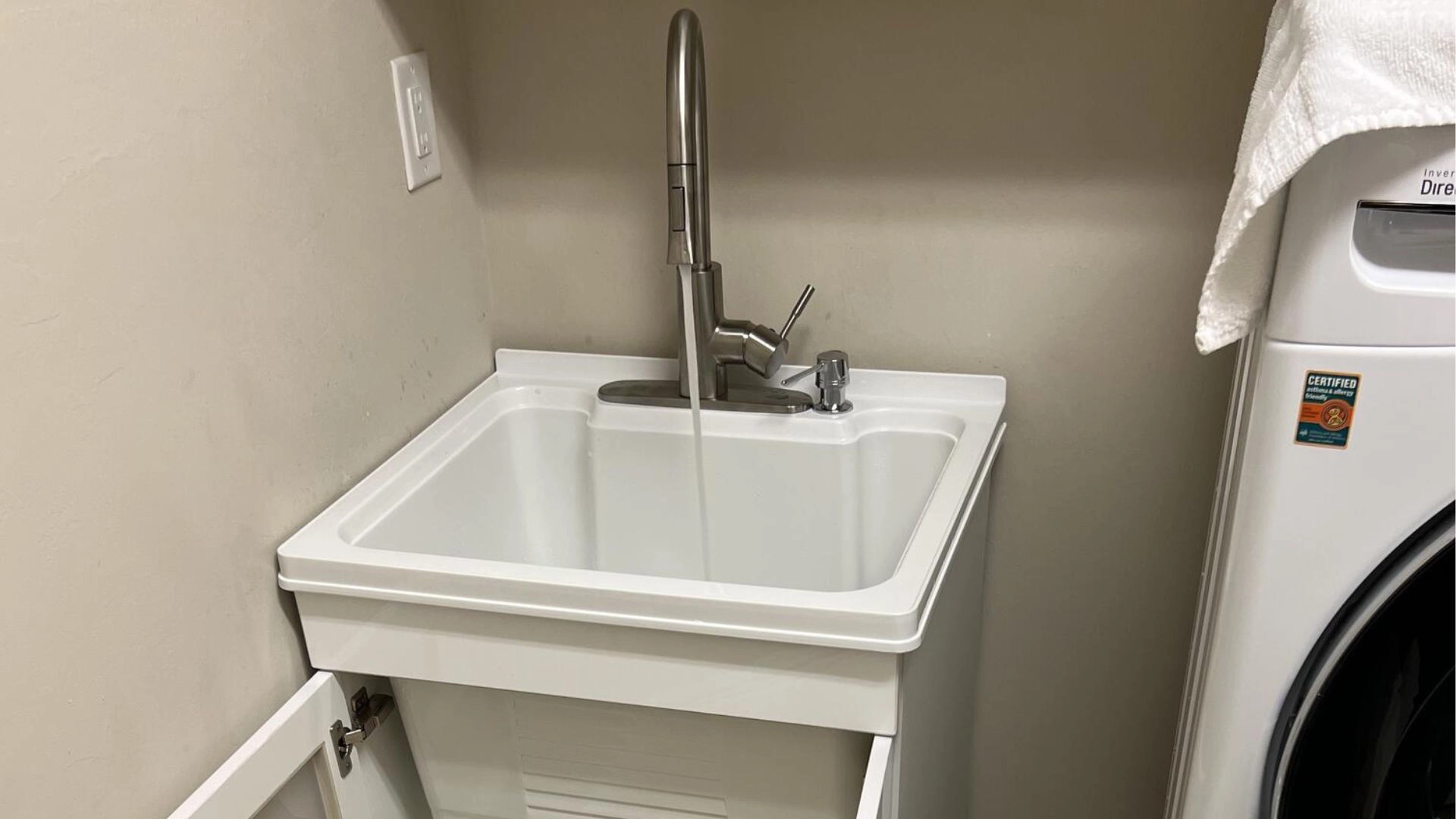
Tried your best and the sink still isn’t draining properly? It might be time to call in blocked drain plumbers. If unpleasant smells linger, the blockage keeps coming back, or you’ve spotted water damage around the laundry area, don’t wait.
When your best efforts failed, and other drains in the house are also slow, it points to a deeper plumbing problem. In these cases, professional plumbing services are the safest bet.
How Professional Plumbers Solve the Problem
Blocked drain plumbers use advanced tools to pinpoint and fix issues quickly. A CCTV drain camera lets them see exactly what’s blocking the laundry drain—be it tree roots, buildup, or broken pipes.
Once the cause is found, high-pressure water jetting blasts through stubborn clogs without damaging your plumbing system. If the problem is due to pipe deterioration, pipe relining can offer a long-term solution without digging up your yard.
The best part? These methods are safe, non-invasive, and done at an affordable price. Unlike DIY guessing games with DIY, plumbers come equipped with the right equipment and knowledge to fix it fast.
Preventative Tips for a Trouble-Free Laundry Drain
Prevent future blockages with a few simple habits that’ll save you time, stress, and money down the line. Start by installing a lint trap over your drain hose. This small addition can make a big difference by catching lint and fabric fuzz before they enter the laundry sink drain and cause buildup.
Clean the drain trap under your laundry room sink regularly. It doesn’t take much for soap scum, grease, and other debris left from washing to collect and restrict water flow. If your laundry room handles a high volume of clothes, towels, or machine use, you’ll want to check it more often.
Also, avoid pouring greasy water, thick laundry detergent, or gritty runoff down the sink. These can coat the inside of pipes and lead to poor drainage. Make it a habit to run hot water after each load to help keep things flowing.
Lastly, schedule plumbing services now and then, especially around the northern beaches, where older homes can have more vulnerable plumbing systems.
Let the Water Flow Freely Again
Blocked drains don’t just ruin your laundry day, they throw off your whole routine. If your laundry sink still isn’t draining properly, despite your best efforts with plungers, baking soda, and boiling water, you might be facing a deeper issue. When gurgling noises, nasty smells, or water overflow continue no matter what you try, it’s time to call in the pros.
Gold Coast Plumbing Company is ready to help when DIY efforts fail. Our expert blocked drain plumbers use top-tier equipment to sort out stubborn clogs quickly and safely. Whether it’s a cracked pipe, tree root invasion, or just years of buildup in your plumbing system, we’ll get your water flowing again.
Don’t put up with a backed-up laundry room sink a day longer. For fast, effective, and professional plumbing services at an affordable price, contact Gold Coast Plumbing Company today.
Published by: Pascal Harb3 September 2025